 KODAK Digital Still Camera
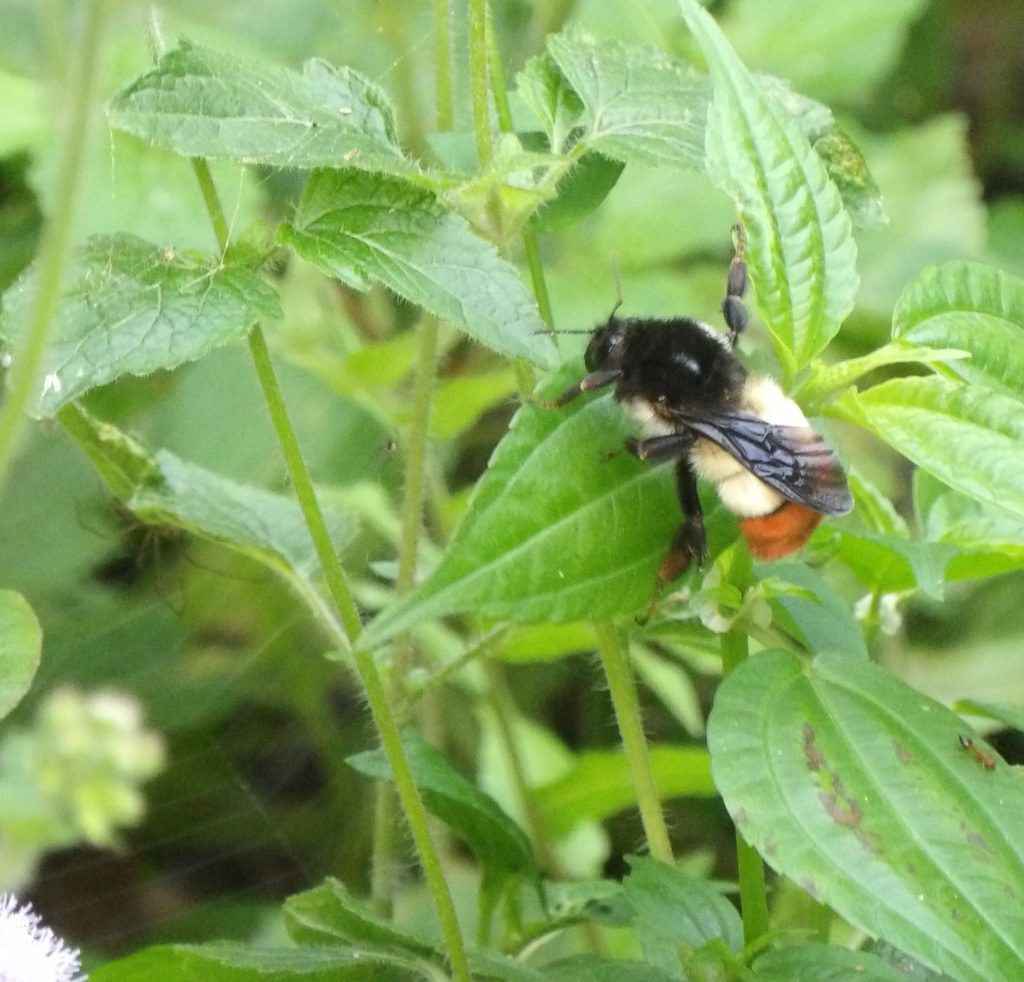
Buzzing insects aren’t uncommon in gardens. Whether it may be wasps, bees, flies or beetles, the sound is familiar to all of us. But bees are the special ones with low pitch, consistent buzzing sound. We have always been told from lower grades about how these furry little creatures are important to pollination and honey production. However, we will discuss not only honeybees but bees as a whole. First, let us define bees: The furry creatures with 2 pairs of wings that primarily feed upon nectar and pollen. Taxonomically, they are the insects under 7 families of the order Hymenoptera, meaning “membrane-winged”. Before describing bees, there are a few misconceptions about bees that need to be addressed: honeybees are the only bees that pollinate, all bees make commercial honey, bees reduce the produce by sucking the nectar and all bees are social. Social bees represent less than 5% of the total 20,000 species of bees estimated worldwide. The sociality in bees is a spectrum created by millions of years of evolution ranging from highly social organisation (eusocial) to completely solitary nature. The remaining 95 % of completely solitary, semi-social or communal bees are critical for the ecosystems. The coevolution of bees and flowering plants has led to monolectic relations i.e. a particular species of bee compulsory to pollinate a specific flower and vice versa. In some cases, bees select a few species of related plants. These plants also depend fully on them for their reproduction. Native plants that are vital for our ecosystems need these native bees for pollination. And surprisingly, most of the native bees are either solitary or semi-social. They include mining bees, carpenter bees, leafcutter bees, mason bees and many more. 25% of wild bee populations have declined since the 1990s. The most probable causes are the use of insecticides, monoculture, habitat destruction, climate change, invasive plants, diseases and parasites. Without these vital pollinators, we wouldn’t be able to enjoy almost all of the fruits (apples, peaches, nuts, berries) that are entomophilous. They make up 75% of our total diet. A chain reaction of negative impacts would be triggered by the disappearance of bees. Food shortages, failing wild and agricultural ecosystems, sharp decline in plant diversity and hence, related animals. But we can save bees by the simplest of actions planting bee-friendly native flowers, reducing chemicals (pesticide and insecticide) use, promoting organic farming, establishing wildflower meadows, and bee hotels and sharing information, educating and research. The fate of these little heroes is in our hands. Timely actions will prevent their sweet honey, hypnotizing buzz and invaluable pollination from disappearing forever. Kushal Khanal is a student at the Institute of Forestry, Pokhara, with a passion for wildlife conservation, particularly in mellitology (the study of bees).
 Kushal Khanal ( 4th year, 1st sem student )
Institute of Forestry, Pokhara Campus, Pokhara